
page 12-16
Vietnamese
Bhikkhuni
Dhammananda:
TransformingWar andViolencetoPeace andRespect
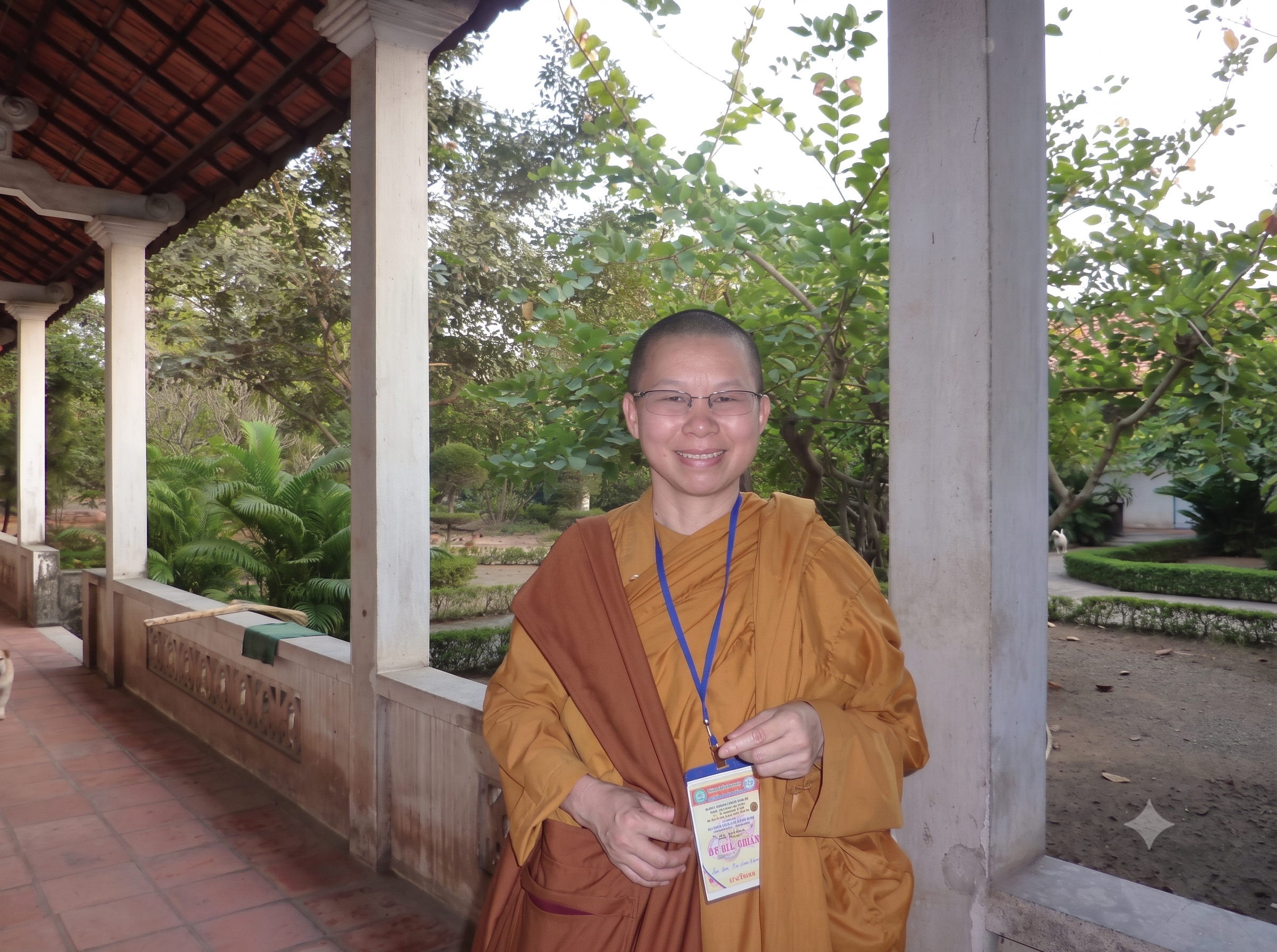
Sakyadhita Conference Vietnam
Bombs from American B-52 planes and heavy rockets pummeled the rural North Vietnam village where Bhikkhuni Dhammananda's working class parents struggled to stay alive during the escalating Vietnam War. Born in 1969 on a gloomy day in winter, Bhikkhuni Dhammananda, a skinny baby and the sixth of ten children, was given the name Pham, thi Minh Hoa. The translation is Pham, the Bright Flower, her name symbolizing hope and beauty at a time U.S. bombs were destroying the very forests she would come to love. The raging war prompted Ayya Dhammananda's family to flee the delta village of her birth and relocate to a remote area bordering Laos, a town nestled between the mountain ranges named Truong Son, the Long Range mountains.
Her hard working parents succeeded in farming a fertile track of land. Ayya (the term of respect she prefers) Dhammananda grew up in a wooden house, bustling with children and activity. Outside were the family's animals and beyond them lush forests, rivers, and mountains. In her world, one way of measuring quality of life was to count the craters from American bombs. In her village in the Ha Tinh province, she found only two bombed sites compared to many more in other towns. Their home, one of the largest in the village, attracted a steady stream of beggars. Even as a little girl, Pham delighted in giving food to those in need. She could not have imagined then that one day she would choose to abandon everything to ordain as a bhikkhuni and become a person dependent on others for food as well.
Her childhood and adolescence vacillated between tenderness and harshness, encouragement and disparagement, loving ties and wrenching separations. She had a kind-hearted mother who did not know how to express love and a father who recited poems and proverbs to her before she fell asleep at night and insisted the highly intelligent Pham go away to the best school but burned her books and beat her with a cane when she became too engrossed in learning. As a little girl Pham regularly turned to her grandmother for nurturance and affection.
In January 1973, almost four years after Ayya Dhammananda was born, a ceasefire had been arranged and U.S. ground troops left Vietnam. Soon afterward, though, fighting resumed between the North and South until South Vietnam surrendered on April 30, 1975. Pham was six. Peace lasted for only a short time. War broke out again, this time with China in the north and the Khmer Rouge in the south. The years from 1978 to 1981 were the most terrifying. In 1978 when Pham was in second grade, adults dug deep tunnels around her school so that teachers and children had a safe haven to escape the bombing.
Growing up in a veritable battlefield took its toll on Pham. A joking façade concealed a serious, thoughtful child who wanted to make sense of a bewildering, violent world. She sums up her life journey in three sentences. "I was born in suffering. I grew up in suffering and was looking for a way to overcome dukkha. I found the way and now live by it." The part she omits is an earnest wish to help others overcome suffering as well.
"I was born in suffering. I grew up in suffering
and was looking for a way to overcome dukkha.
I found the way and now live by it."
Her parents met when her father returned to his hometown after an absence of twenty-five years. Pham's mother happened to be caring for Ayya Dhammananda's paternal grandfather, a Confucius scholar who failed a test that could have led to a governmental position which would be appointed by the monarch. That failure scarred him. His bitterness impacted the entire family. Perhaps part of Ayya Dhammananda's thoughtful personality and quest for a solution to life's cruel realities was partly forged by a combination of the tough life she was born into and a family that discussed ideas and philosophy.
Yet, not all of her life involved hurt and sadness. Some of Ayya Dhammananda's happiest childhood memories involved listening to her father tell stories about his exotic experiences in foreign lands. His recounting of time spent in Thailand introduced her to Theravada Buddhism and sparked an inquiry that transcended the spiritual amalgam of animism, sprite worship, devotion to Quan Yin, Pure Land Buddhism, Christianity, and Confucianism prevalent in Vietnamese villages. Pham's father, a nationalist, joined the Vietnamese Liberation Army in Bangkok in 1946 when he was twenty-four. From northeast Thailand, his group advanced into Laos and Vietnam where they fought the French. Her father remained a fighter until the final Vietnamese victory over the French in Dien Bien Phu in 1954.
(Her father's)... recounting of time spent in Thailand introduced her to
Theravada Buddhism and sparked an inquiry that transcended the spiritual
amalgam of animism, sprite worship, devotion to Quan Yin, Pure Land
Buddhism, Christianity, and Confucianism prevalent in Vietnamese villages.
As a little girl Pham was fascinated by her father's tales about monks who were offered sticky rice when going on alms rounds in the early morning. Her father described the monks as quiet, good hearted, and generous in sharing what they had with the poor and homeless. The young Pham dreamed of living in those places so she could offer food. Her father could only apologize for living in a part of Vietnam in which there were no monks and expressed regret that it was not a Vietnamese custom to offer food to monastics the way they do in Thailand and Laos. A seed, a vision of another way of life, had been planted in Pham's heart. Her father's stories may have enabled her to imagine a life larger, more complex, and more enriching than the one her rural village afforded, and may have led to her spending fourteen years of her adult life in countries other than Vietnam.
Exploration, courage, and adventure were core aspects of her family's legacy.
As Pham entered her teen years, there was mounting tension and worry at home. Her oldest brother joined the army and was sent to Cambodia. Her father frequently lost his temper, often leaving her mother and grandmother in tears. In addition, her two older sisters left school to work on the farm. When Pham was fourteen, her brother returned home a disabled war veteran. He lost a leg and suffered many head wounds caused by a landmine. Late at night, under the moonlight, her brother played the guitar. He and her sisters sang melancholy songs about life, love, and war.
Already feeling despondent, her depression intensified when she was sent to live with an elderly uncle and his wife to study math after doing well in a school contest. She missed her family and asked to return but instead her parents sent a sister to stay with her. Later she would feel grateful to her family for insisting on the best education for her.
Her childhood and adolescence vacillated between tenderness and harshness,
encouragement and disparagement, loving ties and wrenching separations.
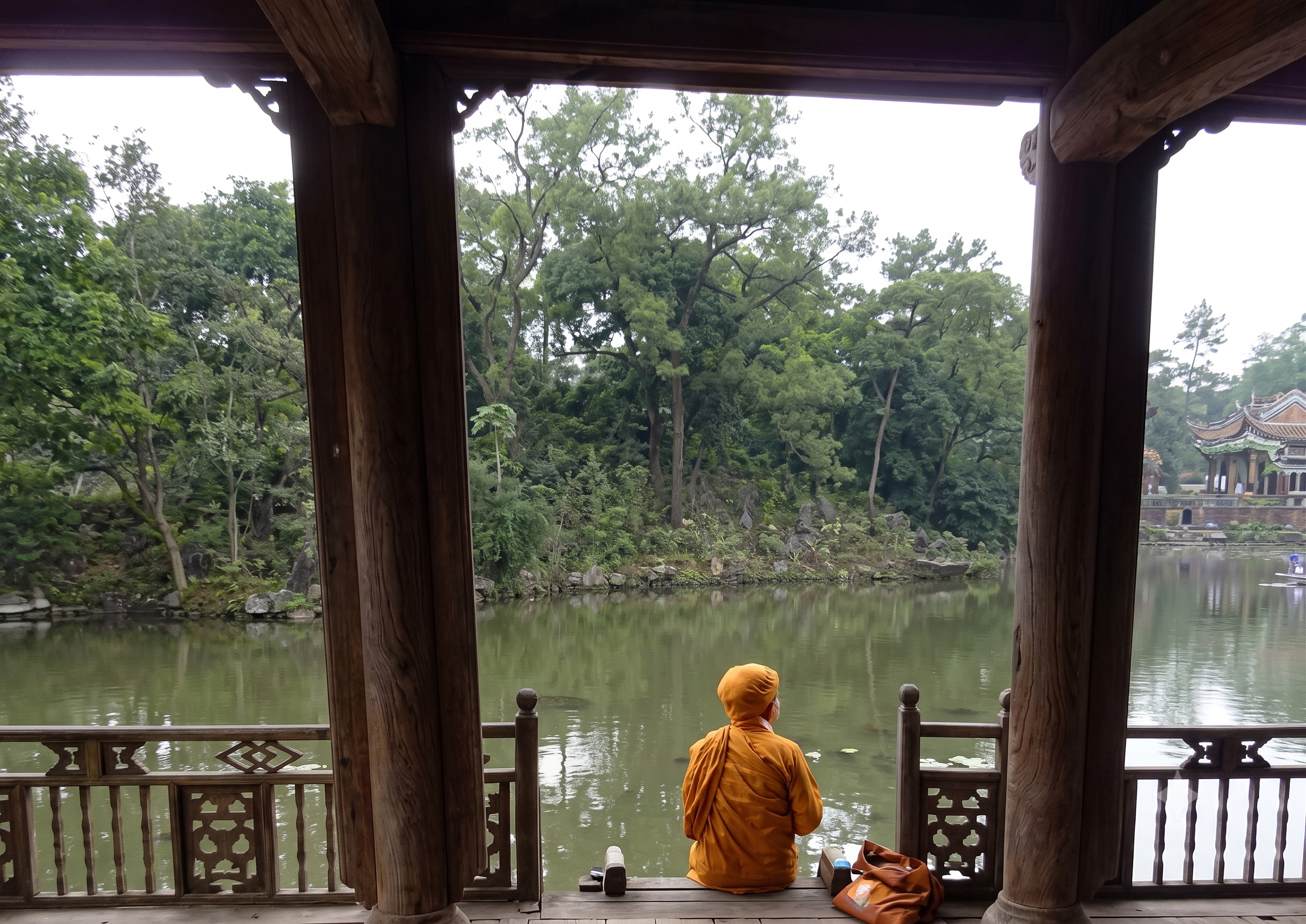
By the time she was sixteen, she became increasingly aware that her life was without meaning or substance. Sometimes, when alone, she would sit quietly by the side of a river, gazing at the far away blue mountain range covered in white clouds, and wish that one day she could live there in solitude. Around this time, Ayya Dhammananda had a striking and unforgettable dream. In the dream, she was a tall, thin man in his thirties, walking on a narrow, village path. The man's head was shaven and he was wrapped in a yellowish robe. He went from house to house, receiving food that he collected in a rounded, black object. Her current parents were donors. With barely enough food for the day, the monk went to the outskirts of a forest, sat under the foot of a tree, and mindfully ate. When Pham recounted the dream to her father, he explained the person in the dream was a wandering Buddhist monk. At this point in her life, she had yet to see a Buddhist monk or nun, even in a movie or novel.
Conflicts between her parents made the thought of marriage an increasingly unappealing prospect even at a time when Pham was losing her tomboy figure and occasionally fantasizing about romance. Her resistance to marriage intensified as she witnessed her oldest sister's troubling experiences with men. The young Pham vowed to never fall in love, to never allow herself to become a victim of men. It was not only her parents' arguments and sister's difficulties that made her wary of family life, but comments her father made as well. When she questioned him about harming and killing others when he was a soldier, her father explained that you did not think about things like that when at war. In other conversations, her father implied that later in life he felt obliged to make other moral concessions as well, those times in the name of providing for his family.
Ayya Dhammananda, still years away from knowing she would one day ordain, thought long and hard about her father's remarks. She feared having a family might force her to do something contrary to her conscience as well. Her oldest brother, though, urged her "to live life in full. Thinking too much makes you miss lived experiences, makes you not a realistic person." She asked her brother how to stop thinking about unwanted or distressing thoughts. He confessed to not knowing but believed monks might know. Ayya Dhammananda recalls feeling relieved that "at least someone knows, and one day I can learn with them." For a number of years, the wish to become a renunciant had been growing. Following high school, Pham made it clear to her family that she wished to become a nun even though she did not know whether to become a Christian or Buddhist nun.
She asked her brother how to stop thinking about unwanted or distressing thoughts.
He confessed to not knowing but believed monks might know.
Ayya Dhammananda recalls feeling relieved that "at least someone knows,
and one day I can learn with them."
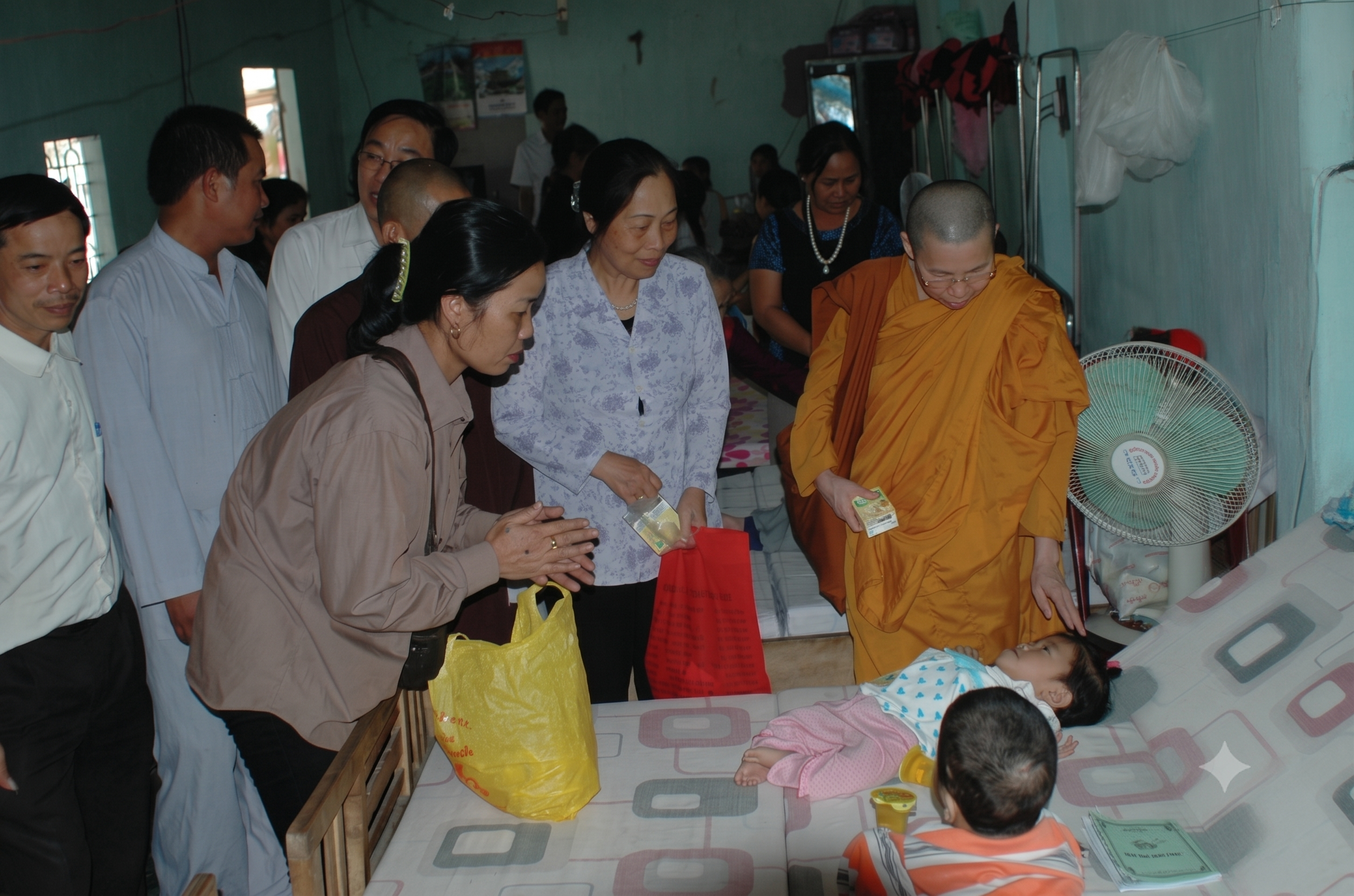
Distracted by tragic events in her family and unsure of what she wished to study, Pham failed the entrance exams to a desired university. She returned home, helped on the farm, and tutored younger siblings. Eventually she entered an educational college at nineteen and graduated at twenty-one. During these college years, she had contact with Mahayana nuns and became a regular visitor at their nunnery in Nha Trang city where her college was located. The idea of becoming a Buddhist nun solidified in her mind during this period. Her eldest brother, always the mentor to everyone in the family, persisted in urging her to live life full tilt. Her family even attempted to match her with a young man.
No matter what her family told her, she remained reluctant to bring a child into the world. Some of the reasons had to with her lingering confusion about life and what she witnessed at home and some of her hesitancy was driven by social and environmental concerns. Following the war, the Vietnamese population had risen considerably at the same time punitive American sanctions made the country worse in every area of life. Many forests had been destroyed by the war. She felt very strongly that she could not add "more burden to this earth," the effect of yet another child in a country already ravaged by years of war and impoverished due to economic sanctions. She wrote stories and articles, voicing her multiple concerns, but none were published.
The sudden loss of a brother in a road accident crystallized her decision to renounce lay life. By the time she and her father reached the hospital, her brother was dead. His death was a brutal reminder of impermanence. She remained with her grief-stricken family for two months at which point nothing could prevent her from leaving home to become a nun. She went to the nearest Buddhist nun monastery in Vinh city which was 80 kilometers from her home. There, she met her first teacher, Ven. Thich Dieu Niem, a nun in her seventies. Pham was admitted after an hour interview centering on her circumstances and motives. This day marked a turning point in her life and was one of the happiest days she had experienced in many years.

President, Alliance for Bhikkhunis